Source Aluminum Chair Base for Office, Sofa, and Table
Find 30 aluminum chair base options from Guangdong suppliers. Compare metal construction, glossy finishes, and standard sizes like 300mm or 350mm. These parts suit office chairs, sofas, and tables, with ISO9001 and RoHS certifications available for reliable sourcing; compare the available evidence and request quotations based on your requirements.
Key considerations
Products List


Comprehensive Sourcing Guide
Aluminum Chair Base Sourcing Guide
Procurement teams evaluating aluminum chair bases must first distinguish between fixed and adjustable configurations, as the supplied data indicates a mix of unadjustable and height-adjustable options. The observed listings highlight specific model numbers like AHL-AL5001 and Base09, which serve as critical identifiers for verifying the exact mechanical properties required for your specific furniture assembly. Buyers should prioritize understanding whether the base is designed for a single chair or a multi-unit setup, as the selling units often appear as single items despite bulk ordering potential.
The material composition is a primary decision point, with listings explicitly citing both general metal and specific aluminum alloy constructions. This distinction affects the final weight, corrosion resistance, and load-bearing capacity of the finished product. Sourcing strategies must account for the fact that while some units are described as non-customized, others explicitly offer customization services, requiring clear communication on whether standard silver finishes or specific design styles like modern or irregular shapes are mandatory for your project.
Product Scope and Observed Listing Signals
The market signals for aluminum chair bases reveal a diverse range of applications extending beyond standard office chairs to include sofas, tables, and side tables. Listings frequently categorize these components under specific usage tags such as "Office Chair Part," "Sofa Chair Feet," and "Coffee Table Base," indicating that a single supplier may offer a broad portfolio of compatible furniture parts. Buyers must carefully map their specific furniture requirements to these tags to ensure the base geometry, such as the rectangular or irregular shapes observed, matches the intended aesthetic and functional load.
Listing attributes also highlight the importance of finish and condition, with glossy treatments and new conditions being standard observations. The presence of specific model numbers like BASE27 and BASE19 suggests a standardized catalog that simplifies comparison, yet the variation in packing methods, ranging from standard export cartons to specific carton types, requires verification. Procurement teams should note that while some items are listed as single items, the availability of customization implies that bulk orders may require tailored packaging solutions to protect the aluminum alloy during transit.
Technical Specifications to Verify
Technical verification begins with the base dimensions, where observed standards include specific measurements like 300, 320, and 350 mm bases, alongside custom options. These dimensions are critical for ensuring compatibility with existing chair mechanisms and ensuring stability across different floor surfaces. Buyers must confirm whether the listed standard sizes align with their existing inventory or if the custom standard option is necessary to accommodate unique design requirements, as the mismatch in base width can lead to significant assembly failures.
The mechanical properties of the base, including rotary and height adjustability, are equally vital for functional performance. The data shows a clear split between fixed rotary bases and unadjustable height models, which dictates the suitability for different seating environments. Additionally, the casting process, referenced as aluminum casting feet in some listings, influences the structural integrity and surface finish. Sourcing teams must request detailed engineering drawings to verify the exact alloy composition and casting quality, ensuring the base can withstand the dynamic loads of daily use without deformation.
Compliance and Safety Documentation
Compliance verification is essential when sourcing aluminum furniture parts, as the observed listings frequently cite ISO9001 and RoHS certifications. These certifications indicate that the manufacturing processes adhere to international quality management standards and restrict the use of hazardous substances, which is crucial for products destined for export markets. Buyers should explicitly request current certification documents for each batch to ensure that the aluminum alloy and any applied finishes, such as the glossy treatment, meet the regulatory requirements of the destination country.
Safety documentation must also address the structural integrity of the base under load, particularly for applications involving sofas or heavy office chairs. While specific test results are not provided in the general listings, the presence of ISO9001 suggests a controlled production environment that likely includes routine stress testing. Procurement teams should require a declaration of conformity that specifically references the load-bearing capacity of the aluminum alloy and the stability of the fixed or rotary mechanisms, ensuring the product meets the safety expectations for commercial and residential use.
Cost Drivers and Commercial Terms
Cost drivers for aluminum chair bases are heavily influenced by the material grade, specifically the distinction between general metal and aluminum alloy, as well as the complexity of the casting process. The observed price range of 0.93 to 50 USD reflects significant variation based on these factors, alongside the level of customization required. Buyers must understand that while standard models like the AHL-AL5001 may offer competitive pricing, custom shapes or specific finishes will incur additional costs that must be factored into the total landed cost calculation.
Commercial terms such as Minimum Order Quantity (MOQ) and packing specifications play a pivotal role in the overall procurement strategy. The observed MOQ range of 1 to 500 units allows for flexibility, enabling buyers to test the market with small orders or commit to larger volumes for better unit economics. However, the variation in packing, from standard export cartons to specific carton types, can impact shipping costs and damage rates. Sourcing teams should negotiate clear terms regarding packaging standards to ensure the aluminum bases arrive in pristine condition, minimizing the risk of returns and associated logistics expenses.
Supplier Qualification and Quality Control
Supplier qualification requires a rigorous assessment of the manufacturing location and production capabilities, with Guangdong and Foshan, China, being the primary origins observed in the listings. These regions are known for their robust furniture manufacturing ecosystems, but buyers must verify the specific factory's capacity to handle aluminum casting and finishing processes. The presence of multiple model numbers and customization options suggests a mature supply chain, yet direct verification of the production line's quality control protocols is necessary to ensure consistency across batches.
Quality control measures should focus on the consistency of the aluminum alloy composition and the durability of the glossy treatment. Since the listings mention both non-customized and customized options, the supplier must demonstrate the ability to maintain strict tolerances regardless of the order type. Buyers should implement a sampling protocol that includes visual inspections for surface defects and mechanical tests for the rotary and height adjustment mechanisms. Establishing a clear feedback loop with the supplier regarding any deviations in the standard 300/320/350 mm base dimensions is essential for maintaining product integrity.
Long-Term Procurement Checks
Long-term procurement success depends on establishing a reliable supply chain that can adapt to changing design trends and volume requirements. The observed availability of customization suggests that suppliers are capable of evolving with market demands, but buyers must formalize these capabilities through long-term agreements that specify lead times and quality benchmarks. Regular audits of the supplier's production processes, particularly regarding the aluminum casting and finishing stages, will help ensure that the product quality remains consistent over time.
Sustainability and supply chain resilience are also critical considerations for the future. The use of aluminum alloy offers a potential advantage in terms of recyclability, which aligns with growing environmental standards. Buyers should verify the supplier's commitment to sustainable practices, including waste management during the casting process and the sourcing of raw materials. By maintaining a proactive relationship with the supplier and regularly reviewing performance metrics, procurement teams can mitigate risks and ensure a steady supply of high-quality aluminum chair bases for their furniture production needs.
FAQs
What materials are used for aluminum chair bases?
The aluminum chair bases are constructed from high-quality aluminum alloy to ensure durability and stability. This material choice provides a lightweight yet strong foundation for office chairs. The metal construction supports modern design styles while resisting corrosion. Buyers can rely on the robust nature of the alloy for long-term commercial use in various office environments.
Can aluminum chair bases be customized for specific needs?
Yes, customization is available for these aluminum chair bases to meet specific design requirements. Buyers can request modifications to fit unique office chair models or aesthetic preferences. The supplier offers tailored solutions to ensure the base integrates seamlessly with the chair structure. This flexibility allows for precise matching of dimensions and finishes for specialized furniture applications.
What certifications do these aluminum chair bases hold?
These aluminum chair bases hold ISO9001 and RoHS certifications, ensuring quality and safety standards. The ISO9001 certification confirms adherence to rigorous quality management processes during production. RoHS compliance indicates the materials are free from specific hazardous substances, making them suitable for global markets. These credentials provide assurance of product reliability and environmental responsibility for B2B buyers.
How are aluminum chair bases packaged for shipping?
The aluminum chair bases are packaged in standard export cartons to protect them during transit. This packing method ensures the glossy treated surfaces remain scratch-free upon arrival. The sturdy cartons are designed to withstand handling and stacking in logistics chains. Proper packaging minimizes damage risks, ensuring that the bases arrive in pristine condition ready for assembly or installation.
What is the origin of these aluminum chair bases?
These aluminum chair bases originate from Guangdong, China, specifically from Foshan, a major furniture manufacturing hub. The location is known for its advanced production capabilities and supply chain efficiency. Sourcing from this region allows buyers to access high-quality metal furniture components. The Chinese origin ensures competitive pricing and reliable manufacturing standards for international procurement needs.
What finishes are applied to the aluminum chair bases?
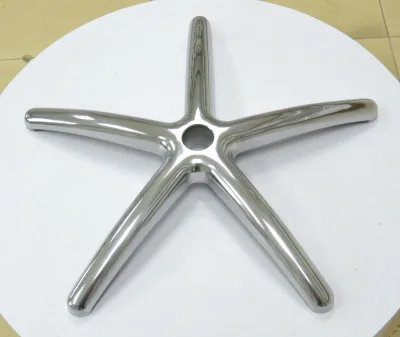
The aluminum chair bases feature a glossy treatment finish that enhances their visual appeal. This finish provides a sleek, modern look suitable for contemporary office environments. The glossy surface also offers some protection against minor scratches and wear. The silver color combined with the glossy finish creates a professional aesthetic that complements various office chair designs.